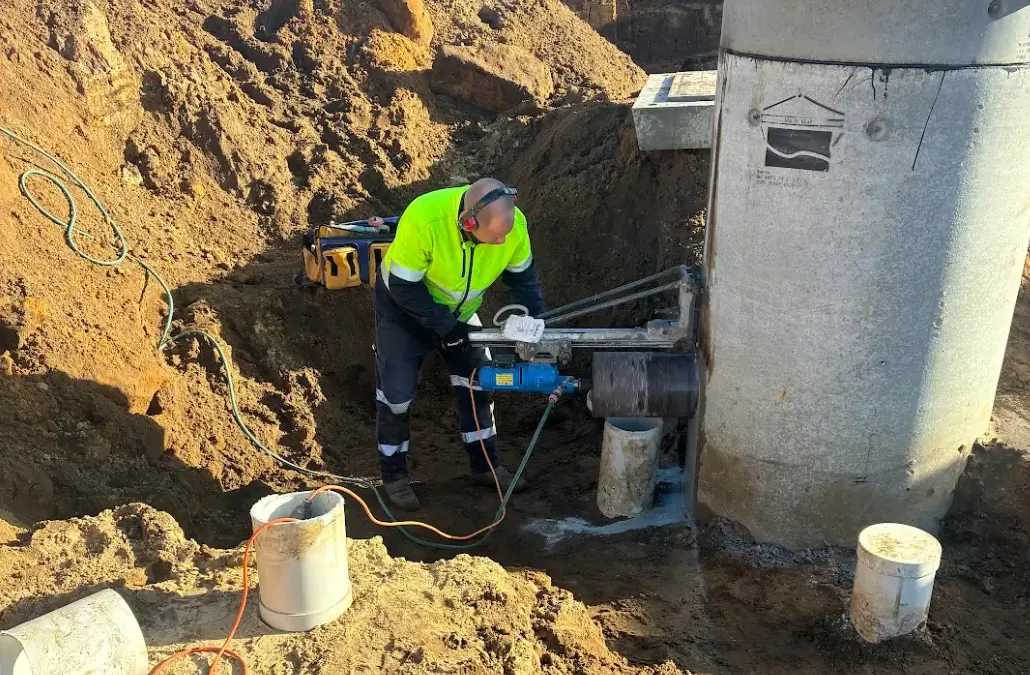
What is concrete core drilling? It is a precise way to create a round opening through concrete for a pipe, conduit or other service. On a plan, each opening may look like a circle with a diameter beside it. On site, making that hole cleanly depends on where it is marked, what is inside the concrete, whether the drill can reach it and what happens to the water and residue during the job.
The drill cuts out a cylinder of concrete rather than breaking a larger area apart. This guide explains how it works and the practical checks we make before the drill starts. If you already have a project and need a contractor, our Core Drilling service covers the work we can take on.
How Does Concrete Core Drilling Work?
A core drill uses a hollow, diamond-tipped bit to cut a circular path through concrete. The material inside the bit is removed as a cylindrical core, leaving an accurately sized opening for a pipe, conduit or other service.
The broad sequence is simple: confirm the hole location and diameter, assess the concrete and surrounding area, set up and secure the drill, cut the opening, remove the core and clean the work area. Depending on the job, the hole may be drilled through a floor, wall or suspended slab.
What makes one job different from another is everything around that sequence. An apparently straightforward hole can need a different setup because of reinforcement, an awkward corner, insufficient power, a finished room on the other side or a diameter beyond the equipment brought for a routine callout.
Why Use a Core Drill Instead of a Grinder and Jackhammer?
A jackhammer breaks concrete apart. A core drill removes only the circular section needed, with less vibration and less unnecessary damage to the surrounding concrete. That matters when a service must fit a specified opening or when the slab and nearby finishes need to remain intact.
We are sometimes called after another trade has tried to make the opening with a grinder or other tools. The first attempt can leave a dusty work area and an irregular hole, yet still require a specialist to finish it. With the right equipment and setup, we can often make the opening faster, cleaner and more neatly than an improvised attempt. Calling before that first cut lets us confirm the position, size, access and dust or slurry controls once, avoiding unnecessary cleanup and rework.
What Is Concrete Core Drilling Used For?
Core drilling is common when plumbing, drainage, electrical, air conditioning or fire services need to pass through concrete. A plumber might need a waste pipe through a slab; an electrician may need a conduit through a wall; a renovation may require new services without breaking out a large section of an existing floor.
The installing trade should confirm what needs to pass through the opening and where it can go. The drilling contractor then needs to establish whether the proposed hole works with the structure, embedded services, the equipment and access on both sides.
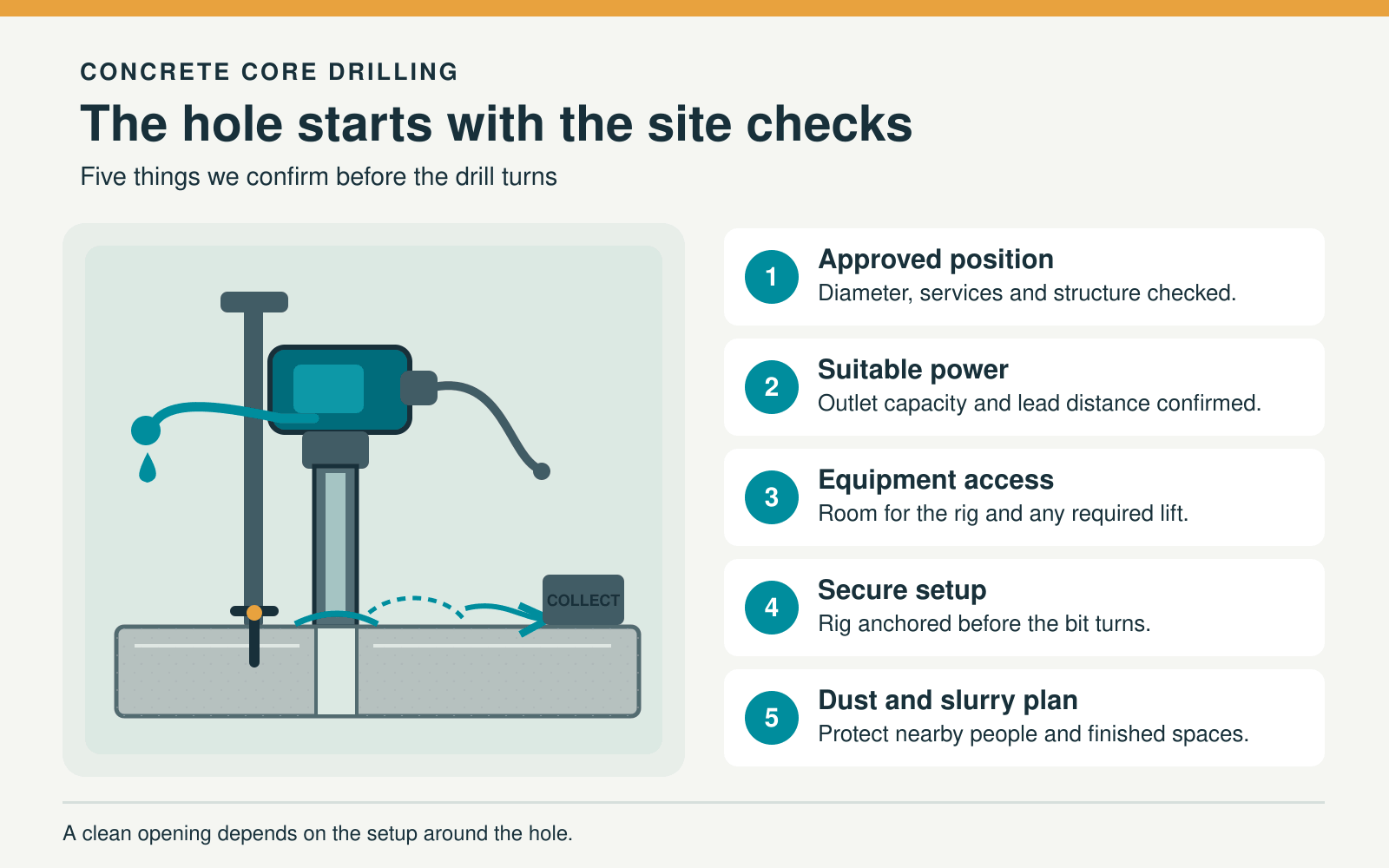
What Do We Check Before Drilling?
The hole itself may take less planning than the conditions around it.
Our first checks include:
- A clearly marked, approved position and diameter. We need to know exactly which opening is required. Its location should be checked by the builder or responsible trade against drawings, services, reinforcement and structural requirements.
- Suitable power. We have arrived to find a 10 amp outlet when the planned equipment needed a 15 amp supply. A long lead run can also cause equipment problems. Confirming the outlet and distance to the work area in advance helps us bring a suitable setup.
- Room for the drill. A mark tight against a wall, in a corner or close to a ceiling may not leave enough clearance for the drill body or rig, even when the bit itself would fit.
- Access to the position. A high wall penetration may require a scissor lift. The lift needs a path in and enough room to put the drill where the hole is marked.
- The space around and beyond the hole. Occupied rooms, other trades, finished surfaces and whatever lies on the opposite side affect how the work is staged and protected.
- A plan for dust, water and slurry. The opening is not a clean result if residue is left for the next trade or tracks into a finished area.
Those checks are why photographs, a marked-up plan, the hole diameter, height, site access and available power are useful when requesting a quote. They help us identify what equipment is needed before arriving.
Can Core Drilling Work in a Tight Space?
An awkward position does not mean we cannot make the opening. It means we need to plan the right setup. A standard rig may not fit beside a wall or beneath a ceiling; an elevated opening may need a lift or another access arrangement. The drill can also take up more room than the small bit that makes the hole, something that is easy to miss when marking it out.
We can assess alternative equipment and setups for difficult locations. Sometimes the marked position can be adjusted with the responsible trade’s approval. In other cases, specialist equipment has to be arranged. That can add a day or two to an immediate job, so sending the access details early is the quickest way to find a workable solution and keep following trades informed.
What Hole Sizes Can Concrete Core Drilling Handle?
The right diameter comes from the service being installed, not from choosing a convenient bit on arrival. We use 60 mm and 75 mm core bits often, particularly for plumbing work. Other holes may call for a different bit, drill or mounting setup.
Larger diameters are possible, but they deserve advanced planning. The required size, concrete thickness, reinforcement, drilling direction and room for the equipment all affect the approach. If a larger bit or specialist setup is needed, it may take a day or two to arrange rather than being available for an immediate callout. Tell us the diameter before booking so we can plan the equipment and realistic timing. There is no useful maximum size to quote without assessing the actual job.
Can You Core Drill Reinforced Concrete?
Yes. Diamond core drilling equipment can cut concrete and reinforcing steel when the opening has been properly planned. But the position of reinforcement, structural design and any embedded services matter. For structural or post-tensioned elements, the responsible project professionals need to approve the location and any necessary investigation before drilling.
The concrete mix can also change the work. We have encountered hard concrete and additives in tilt-panel jobs that slowed drilling and wore the bit much faster than expected. A hole that looks routine from its diameter alone may take longer once the actual material is known.
What About Safety and Cleanup?
We have seen a drill move when it did not have a sound anchor point. It is a reminder that even a familiar hole needs a deliberate setup: we check how the rig is secured before it turns, rather than becoming complacent because the drilling itself looks routine. We also manage water around powered equipment.
Cutting and drilling concrete can produce respirable silica dust, while wet drilling produces water and slurry that must be contained and removed. Dust can affect the operator, other workers and people nearby. In a finished space, fine concrete dust can settle into gaps in flooring and be difficult to remove; slurry left behind can affect the next trade or the interior. We consider the method, protection of surrounding surfaces and cleanup before drilling so the space remains usable afterwards.
That is another reason a DIY attempt can be a false economy. A roughly made hole is visible; dust that spreads or slurry that enters a finished area may create a much wider cleanup problem.
When Should You Call a Core Drilling Contractor?
Call when the required opening is being planned, before anyone attacks the slab with a grinder or jackhammer and before the installing trade is waiting at the hole. Early notice is especially valuable for awkward access, elevated positions and larger diameters because specialist equipment or a lift may need to be arranged.
Send the marked location, diameter, approximate concrete thickness, height, photographs of both sides, access details and available power. If the position or size is still being worked out, We can discuss what information the builder or installing trade needs to settle first. A short conversation up front can save an unsuccessful first attempt and keep the project moving.
The Hole Is Only One Part of the Job
Core drilling is valued because it creates a clean, accurate opening while leaving the surrounding concrete largely intact. The professional difference is in planning that result: checking that the hole is approved and reachable, bringing the right equipment, securing the drill, controlling dust or slurry and leaving the area ready for the next stage.
If you need an opening through concrete, read about our Core Drilling service or get in touch with the hole details before making the first cut. We can assess the site and plan the equipment and timing your concrete core drilling job calls for.